


Texas has long remained the center of energy production and mineral wealth in the United States. The state holds a unique position because of its extensive oil reserves, private land ownership structure, and strong legal protections for landowners. These factors have made Texas mineral rights ownership one of the most valuable and influential sectors in the American energy industry.
Landowners across Texas continue to benefit from oil and gas production through royalties, lease agreements, and long-term investments. Unlike many other states where governments control underground resources, Texas allows private individuals to own and transfer mineral rights. This structure has shaped the state’s economy and strengthened its energy dominance for generations.
Today, mineral rights in Texas continue to attract investors, landowners, and energy companies seeking financial opportunities and resource development.
Understanding Texas Mineral Rights Ownership
Mineral rights ownership gives individuals legal authority over underground resources beneath a property. These resources may include oil, natural gas, coal, and other valuable minerals.
Texas mineral rights ownership allows landowners to:
- Lease mineral rights to energy companies
- Receive royalty payments from production
- Sell mineral rights for financial returns
- Transfer ownership to heirs or investors
- Negotiate exploration agreements
This ownership structure creates valuable income opportunities for property owners throughout the state.
Why Texas Stands Apart from Other States
Texas differs from many states because private individuals own most mineral resources instead of the government. This private ownership system has encouraged energy exploration and land development for decades.
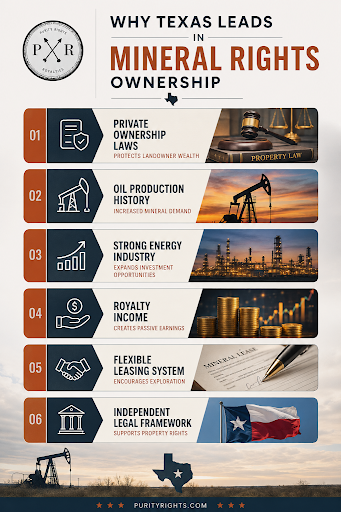
Key Reasons Texas Leads Mineral Rights Ownership
Factor | Impact on Ownership |
Private land ownership | Supports individual mineral control |
Rich oil reserves | Increases mineral value |
Strong legal framework | Protects landowner rights |
Energy industry growth | Expands leasing opportunities |
Historical development | Encourages generational wealth |
These factors continue to strengthen Texas oil and gas mineral rights across the country.
The History of Mineral Rights in Texas
Texas mineral rights history dates back to the nineteenth century, when landowners began discovering oil and natural gas beneath private property. Early oil booms transformed small communities into economic centers while attracting investors from across America.
The famous Spindletop oil discovery in 1901 changed the energy industry forever. Massive oil production created wealth for landowners and established Texas as a global energy leader.
Since then, mineral ownership laws in Texas have evolved to protect private ownership and encourage responsible resource development.
Private Mineral Rights Ownership in Texas
Private mineral rights ownership in Texas remains one of the state’s most significant economic advantages. Unlike federally controlled lands in other regions, most Texas minerals belong to private citizens.
Benefits of Private Mineral Ownership
- Greater financial control for landowners
- Higher leasing flexibility
- Strong negotiation opportunities
- Long-term royalty income
- Transferable property assets
This system encourages investment and supports economic growth throughout the energy sector.
Texas Oil and Gas Mineral Rights
Texas produces more oil and natural gas than any other state in America. Large reserves located in the Permian Basin, Eagle Ford Shale, and Barnett Shale continue driving exploration and production.
Texas oil and gas mineral rights provide substantial revenue opportunities for landowners through:
Revenue Source | Description |
Lease Bonuses | Upfront payments from companies |
Royalty Payments | Percentage of production profits |
Surface Agreements | Compensation for land use |
Mineral Sales | Lump sum financial transactions |
These income streams make mineral ownership highly attractive for many Texans.
Mineral Ownership Laws in Texas
The legal framework surrounding mineral ownership laws in Texas strongly favors private property rights. Texas law allows mineral ownership to remain separate from surface ownership.
This means one party may own the land surface while another controls the underground minerals.
Important Legal Concepts
Dominant Mineral Estate
Mineral owners generally maintain priority access for exploration and production activities.
Lease Agreements
Landowners can negotiate lease terms with oil and gas companies for drilling and production rights.
Royalty Interests
Royalty owners receive production income without paying operational expenses.
Severed Mineral Rights
Mineral rights may be sold separately from surface property ownership.
These legal protections support long-term energy investment and resource development.
Why Investors Prefer Texas Mineral Rights
Investors continue purchasing Texas mineral rights ownership because of strong production potential and long-term value growth.
Investment Advantages
- Consistent energy demand
- Established production infrastructure
- Strong legal protections
- High royalty potential
- Expanding exploration projects
Texas remains one of the most stable energy investment markets in the United States.
Texas Landowner Mineral Rights and Generational Wealth
Many Texas families have owned mineral rights for generations. Royalty income often supports education, farming operations, property expansion, and family investments.
Texas landowner mineral rights can create long-term financial stability through recurring production revenue.
Common Family Benefits
Financial Benefit | Long-Term Impact |
|---|---|
Royalty Income | Passive monthly earnings |
Mineral Leasing | Immediate financial support |
Asset Appreciation | Increased property value |
Estate Transfers | Generational wealth preservation |
This structure continues benefiting families throughout rural and urban Texas communities.
Leasing Mineral Rights in Texas
Leasing remains one of the most common methods for landowners to generate income from underground resources.
Energy companies typically lease mineral rights to explore and produce oil or gas beneath private property.
Key Elements of Mineral Leases
- Bonus payment agreements
- Royalty percentages
- Lease duration terms
- Drilling commitments
- Environmental protections
Landowners should carefully review contracts before signing agreements.
Learn more about leasing opportunities here:
Selling Mineral Rights in Texas
Some landowners choose to sell mineral rights for immediate financial returns instead of waiting for future royalties.
Selling may provide capital for:
- Property investments
- Retirement planning
- Debt reduction
- Business expansion
- Estate settlements
The value of Texas mineral rights ownership depends on production activity, location, and market conditions.
Explore mineral rights selling opportunities here:
Factors That Affect Mineral Rights Value
Several factors influence the value of mineral rights in Texas.
Major Value Drivers
The energy sector contributes billions of dollars annually to the Texas economy. Mineral ownership supports job creation, infrastructure development, and tax revenue generation.
Economic Impact of Texas Mineral Rights Ownership
The energy sector contributes billions of dollars annually to the Texas economy. Mineral ownership supports job creation, infrastructure development, and tax revenue generation.
Economic Contributions
- Supports local businesses
- Funds public services
- Expands employment opportunities
- Strengthens rural economies
- Encourages industrial development
Texas continues benefiting from its strong resource ownership system and energy leadership.
Challenges Facing Mineral Rights Owners
Despite financial opportunities, mineral ownership also presents several challenges.
Common Challenges
- Fluctuating oil prices
- Complex lease negotiations
- Legal disputes
- Environmental concerns
- Changing market conditions
Landowners should work with experienced professionals to protect their interests and maximize financial outcomes.
The Future of Texas Mineral Rights Ownership
Texas continues to lead the energy sector through innovation, exploration, and strong resource management. New drilling technologies and expanding energy demand support future growth opportunities.
As global energy needs increase, Texas mineral rights ownership will likely remain highly valuable for investors and landowners alike.
Energy companies continue exploring untapped reserves while modern production methods improve efficiency and profitability.
Why Paint Rock Royalty Helps Mineral Owners
Paint Rock Royalty assists landowners through professional mineral rights services and industry expertise. Their team helps clients navigate leasing, selling, and ownership opportunities across Texas.
Services Offered
- Mineral rights evaluation
- Lease negotiation assistance
- Royalty consultation
- Mineral acquisition guidance
- Ownership support services
Their expertise helps landowners make informed decisions regarding valuable mineral assets.
Visit Paint Rock Royalty here:
Final Thoughts on Texas Mineral Rights Ownership
Texas continues dominating the energy industry because of its strong private ownership structure, extensive oil reserves, and supportive legal framework. Landowners across the state benefit from valuable mineral assets that create long-term financial opportunities.
From leasing agreements to royalty income, mineral rights in Texas remain essential for economic growth and generational wealth creation. Investors and landowners continue to recognize the significant value of Texas oil and gas mineral rights.
Whether you plan to lease, sell, or preserve your mineral assets, understanding mineral ownership laws in Texas can help protect your financial future.
Frequently Asked Questions
What are mineral rights in Texas?
Mineral rights give individuals legal ownership of underground resources such as oil, gas, and other valuable minerals.
Why does Texas have extensive private mineral ownership?
Texas historically allowed private landowners to retain mineral ownership instead of transferring resources to government control.
Can mineral rights be sold separately from land?
Yes. Texas law allows mineral rights to remain separate from surface property ownership.
How do mineral owners earn income?
Owners may receive lease bonuses, royalty payments, or proceeds from selling mineral rights.
Why are Texas mineral rights valuable?
Texas contains major oil and gas reserves, strong energy infrastructure, and consistent production activity that increases mineral value.