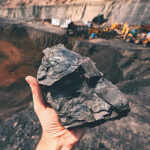


Understanding how to prove mineral rights ownership is essential for landowners, investors, and heirs seeking financial clarity and legal protection. Many property owners assume they automatically own the minerals beneath their land, yet that assumption often leads to confusion or disputes later. Therefore, learning how to verify mineral rights ownership and gather accurate documentation is a critical step in protecting your assets.
This comprehensive guide explains how to prove mineral rights ownership, outlines the required documents, and shows practical methods to confirm your legal rights.
What Are Mineral Rights and Why Ownership Matters
Mineral rights refer to the legal ownership of underground resources such as oil, gas, coal, and other valuable minerals beneath a property. These rights can be sold, leased, or inherited separately from surface ownership, which creates complexity in determining who truly owns the minerals.
If you want to prove mineral rights ownership, you must understand that ownership may have changed multiple times over decades. Consequently, proper documentation and research become essential when verifying your claim.
Key Documents for Mineral Rights Ownership
To establish mineral rights ownership proof, you need to gather specific legal records that clearly demonstrate your claim. These documents provide evidence of ownership history and help confirm your rights.
Essential Documents Include
- Mineral deeds that transfer ownership of subsurface rights
- Property deeds that may include or exclude mineral rights
- Lease agreements for oil and gas extraction
- Division orders showing royalty ownership percentages
- Royalty interest documentation confirming payment rights
- Probate records, if rights were inherited
Each of these documents plays a vital role in proving ownership and must be carefully reviewed for accuracy.
Core Documents and Their Purpose
Document Type | Purpose | Where to Find |
Mineral Deed | Transfers mineral ownership | County clerk property records |
Property Deed | Shows land ownership details | Local recorder’s office |
Lease Agreement | Grants extraction rights | Oil and gas companies |
Division Order | Confirms royalty share | Energy companies |
Probate Records | Verifies inherited rights | County court records |
How to Verify Mineral Rights Ownership
If you are wondering how to verify mineral rights ownership, the process involves a detailed review of public records and historical transactions. This process ensures that your claim is valid and legally recognized.
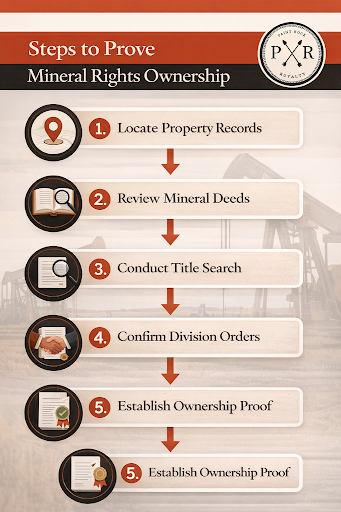
Step-by-Step Verification Process
- Start with a title search for mineral rights.
A title search traces ownership history and reveals any transfers, splits, or reservations affecting your mineral rights. - Visit the county clerk’s property records.
These records contain official filings such as deeds, leases, and transfers that establish ownership history. - Review mineral deed records carefully.
Mineral deeds often contain specific language that determines whether rights were retained or sold. - Check division order ownership.
If you receive royalties, division orders confirm your ownership percentage and interest. - Consult professionals if needed.
Landmen or attorneys can help interpret complex records and verify ownership accurately.
How to Check Mineral Rights Ownership Online
Modern technology has made it easier to check mineral rights ownership through digital databases and public record systems. Many counties provide online access to property records, allowing users to search by name, parcel number, or legal description.
However, online records may not always be complete, especially for older transactions. Therefore, combining online searches with in person record reviews ensures more accurate results.
Who Owns Mineral Rights on My Land
One of the most common questions property owners ask is, ” Who owns mineral rights on my land. The answer depends on historical transactions and whether previous owners retained or sold those rights.
For example, a previous owner may have sold the mineral rights while retaining surface ownership. In such cases, even though you own the land, another party owns the minerals beneath it.
To determine ownership, you must carefully examine:
- Past deeds and conveyances
- Recorded reservations of mineral rights
- Lease agreements with energy companies
Common Challenges in Proving Ownership
Proving mineral rights ownership can be complex due to fragmented ownership and incomplete records. Many properties have been divided among multiple heirs or sold in portions over time.
Common Issues Include
- Missing or incomplete documentation
- Multiple heirs claiming ownership
- Errors in legal descriptions
- Unrecorded transfers or agreements
Therefore, resolving these challenges often requires professional assistance and thorough investigation.
Importance of a Title Search for Mineral Rights
A title search for mineral rights is one of the most reliable ways to confirm ownership. This process involves examining historical records to identify all transfers and claims associated with the property.
A professional title search provides:
- A clear chain of ownership
- Identification of any disputes or claims
- Verification of current ownership status
Without a proper title search, proving ownership becomes significantly more difficult.
Working With Experts to Prove Ownership
While it is possible to conduct your own research, working with professionals often leads to more accurate and efficient results. Landmen, title companies, and attorneys specialize in mineral rights research and can help you navigate complex records.
Additionally, companies like Paint Rock Royalty offer guidance for those looking to manage or sell their mineral rights. You can explore their services here:
- https://paintrockroyalty.com
- https://paintrockroyalty.com/selling-mineral-rights
- https://paintrockroyalty.com/lease-oil-and-gas-mineral-rights
These resources provide valuable insights into ownership, leasing, and selling opportunities.
Bullet Summary: Quick Checklist for Ownership Proof
- Gather all relevant mineral and property deeds
- Conduct a thorough title search for mineral rights
- Review the county clerk’s property records
- Confirm division order ownership if applicable
- Verify royalty interest documentation
- Consult experts for complex cases
Why Accurate Ownership Proof Matters
Establishing mineral rights ownership proof is not just a legal requirement but also a financial necessity. Ownership determines your ability to lease rights, receive royalties, or sell your interest.
Moreover, clear documentation prevents disputes and ensures that you receive the full value of your assets.
Conclusion
Learning how to prove mineral rights ownership requires patience, attention to detail, and a thorough understanding of legal records. By gathering the right documents, conducting a title search, and verifying ownership through official records, you can confidently establish your claim.
Whether you plan to lease, sell, or simply understand your rights, taking the time to verify ownership protects your investment and provides long-term security.
Take the Next Step With Confidence
If you are ready to confirm, manage, or sell your mineral rights, now is the perfect time to act. Accurate ownership proof opens the door to financial opportunities and long-term security.
Explore trusted guidance and expert support at Paint Rock Royalty, where you can discover tailored solutions for leasing or selling your mineral rights. Take control of your assets today and unlock their full potential with confidence.
Frequently Asked Questions
How do I prove mineral rights ownership quickly
You can start by collecting your mineral deeds and reviewing the county clerk’s property records to confirm ownership history accurately.
What documents are needed for mineral rights ownership
Essential documents include mineral deeds, property deeds, lease agreements, division orders, and royalty interest documentation.
Can I check mineral rights ownership online
Yes, many counties offer online access to property records, though older records may require in-person verification for accuracy.
What is a title search for mineral rights
A title search reviews historical records to establish ownership history and identify any claims or disputes affecting the property.
Who owns mineral rights if I own the land
Ownership depends on past transactions, as previous owners may have sold or retained mineral rights separately from the land.