


Understanding how to transfer mineral rights is essential for landowners, heirs, and investors who manage valuable underground assets. Mineral rights include ownership of resources such as oil, gas, and other minerals beneath the land surface. Therefore, transferring these rights requires careful planning, legal awareness, and proper documentation to avoid future disputes.
This guide explains the mineral rights transfer process in a clear and reader-friendly way while helping you avoid common mistakes. Moreover, it provides actionable insights whether you are gifting rights, selling them, or assigning mineral rights to heirs.
What Are Mineral Rights and Why Do They Matter
Mineral rights refer to the legal authority to explore, extract, and profit from minerals beneath a property. These rights can be separated from surface ownership, which means a different person may own the land above.
For example, a landowner may sell mineral rights while keeping surface rights. As a result, understanding ownership boundaries becomes critical before initiating any mineral deed transfer steps.
Key reasons mineral rights are valuable include:
- Potential royalty income from oil and gas production
- Long-term financial security for families
- Opportunities to sell or lease rights for immediate cash
Additionally, mineral rights can increase estate value, which makes proper transfer planning even more important.
Overview of the Mineral Rights Transfer Process
Royalty estimates influence decisions related to leasing, selling,g or holding mineral rights. An inaccurate estimate can undervalue assets or create unrealistic expectations. Because of this, professional reservoir engineering analysis plays a critical role.
Accurate royalty estimate calculation helps mineral owners plan finances with confidence. It also supports negotiations with operators and buyers. When production forecast modeling is grounded in engineering data, projections become more reliable.
Step-by-Step Process
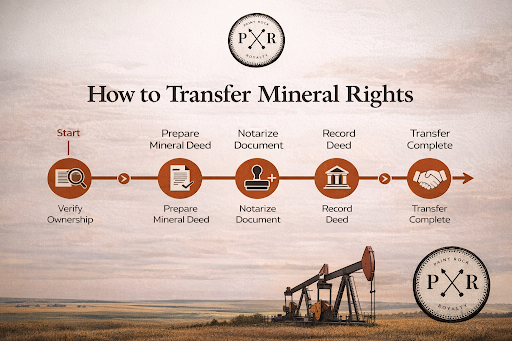
Step | Description |
Verify Ownership | Confirm legal ownership through title records |
Prepare Mineral Deed | Draft a deed specifying transfer details |
Notarize Document | Ensure legal validation of signatures |
Record the Deed | File with the county clerk’s office |
Notify Relevant Parties | Inform operators or companies involved |
Furthermore, working with professionals can simplify complex cases, especially when dealing with multiple heirs or disputed titles.
Mineral Deed Transfer Steps Explained Clearly
A mineral deed is the legal document used to transfer mineral rights ownership. It must be accurate and properly executed to avoid complications.
Key Elements of a Mineral Deed
- Name of the current owner and the new owner
- Legal description of the property
- Type of transfer, such as sale or gift
- Signature and notarization
In addition, errors in the legal description can delay or invalidate the transfer, so attention to detail is crucial.
Types of Mineral Deeds
There are several deed types used depending on the situation:
- A warranty deed that guarantees clear ownership
- A quitclaim deed, which transfers interest without guarantees
- Special warranty deed with limited assurances
Therefore, selecting the correct deed type depends on your level of ownership certainty and legal advice.
How to Transfer Mineral Rights in Texas
Texas has specific regulations that make it important to understand local requirements when transferring mineral rights.
Texas Specific Requirements
- Deeds must be filed in the county where the property is located
- Accurate legal descriptions are mandatory
- Recording fees must be paid at the time of filing
Additionally, Texas has a strong oil and gas industry, which means mineral rights often hold significant value. Therefore, professional guidance is highly recommended.
You can explore expert assistance through services like Paint Rock Royalty, which specializes in mineral rights management and transactions.
Assigning Mineral Rights to Heirs
Assigning mineral rights to heirs is a common practice in estate planning. However, it requires careful documentation to ensure a smooth ownership transfer.
Common Methods
- Transfer through a will
- Establish a trust for distribution
- Use a transfer-on-death deed where applicable
Moreover, assigning mineral rights to heirs early can reduce legal complications and avoid probate delays.
Benefits of Proper Assignment
- Prevents disputes among family members
- Ensures continuity of royalty income
- Simplifies future transfers
As a result, estate planning should include a clear strategy for mineral rights ownership
Transfer Mineral Rights After Death
Transferring mineral rights after death involves probate or alternative legal processes, depending on the estate structure.
Probate Process Overview
- Validate the will in court
- Identify rightful heirs
- Distribute mineral rights according to the will
- Record the transfer officially
However, probate can be time-consuming and expensive, which is why many owners choose trusts or joint ownership arrangements.
Tips to Simplify Post-Death Transfers
- Keep ownership records updated
- Maintain clear legal descriptions
- Consult legal professionals early
Additionally, using professional services such as https://paintrockroyalty.com/how-it-works can streamline the process and reduce delays.
Selling Versus Gifting Mineral Rights
When considering how to transfer mineral rights, it is important to decide whether to sell or gift them.
Selling Mineral Rights
Selling provides immediate financial benefits and is often preferred by owners who want liquidity.
Benefits include:
- Lump sum payment
- No future management responsibilities
- Reduced risk exposure
You can explore selling options at https://paintrockroyalty.com/selling-mineral-rights.
Gifting Mineral Rights
Gifting is commonly used for family transfers and estate planning.
Advantages include:
- Preserves family ownership
- Avoids immediate tax implications in some cases
- Strengthens generational wealth
Therefore, the choice depends on financial goals and long-term planning strategies.
Leasing Mineral Rights Instead of Transferring
Leasing is another option where ownership remains with the original owner while allowing companies to extract resources.
Key Features of Leasing
- The owner receives royalties from production
- Lease agreements define terms and duration
- Ownership remains unchanged
Learn more about leasing opportunities at https://paintrockroyalty.com/lease-oil-and-gas-mineral-rights.
Common Mistakes to Avoid
Mistakes during the mineral rights transfer process can lead to legal issues or financial loss.
Avoid These Errors
- Incorrect property descriptions
- Missing signatures or notarization
- Failure to record the deed
- Ignoring tax implications
Moreover, a lack of professional advice often leads to costly errors, especially in complex ownership situations.
Why Professional Assistance Matters
Handling mineral rights transfers without guidance can be risky due to legal and technical complexities.
Benefits of Expert Help
- Accurate documentation
- Faster processing times
- Reduced legal risks
- Better financial outcomes
You can learn more about professional support at https://paintrockroyalty.com/what-we-do and explore areas of interest at https://paintrockroyalty.com/areas-of-interest.
Conclusion
Learning how to transfer mineral rights is essential for protecting your assets and ensuring smooth ownership transitions. Whether you are transferring rights to heirs, selling them, or managing estate planning, each step requires careful attention and proper documentation.
Furthermore, understanding the mineral rights transfer process helps you avoid costly mistakes and ensures compliance with legal requirements. Therefore, taking a strategic approach and seeking expert guidance can make the process efficient and stress-free.
Take Control of Your Mineral Rights Today
Ready to take the next step with confidence and clarity? Connect with experienced professionals at Paint Rock Royalty, who understand mineral rights deeply and can guide you through every stage smoothly. Whether you want to sell, lease, or transfer mineral rights ownership, expert support can help you unlock the full value of your assets.
Explore your options today and discover how simple the process can become with the right guidance.
Frequently Asked Questions
What is the first step in transferring mineral rights?
The first step is verifying ownership through official records to ensure you have legal authority to transfer the rights.
Can mineral rights be transferred without selling them?
Yes, they can be gifted, inherited, or assigned through a trust without involving a sale.
How long does the mineral rights transfer process take?
The process can take a few weeks, depending on documentation accuracy and county recording timelines.
Are taxes involved in transferring mineral rights?
Yes, tax implications vary based on whether the transfer is a sale, gift, or inheritance.
Do I need a lawyer to transfer mineral rights?
While not always required, legal assistance is highly recommended to avoid errors and ensure compliance.