

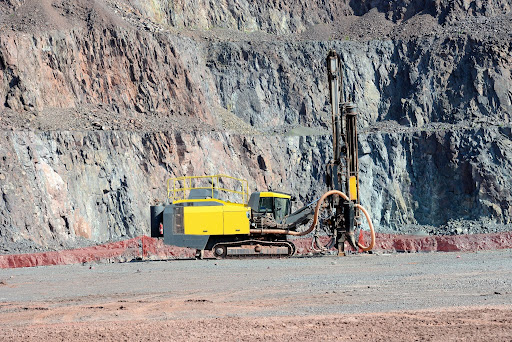
Mineral owners often wonder why one property receives strong buyer interest while another receives little attention. One major reason is the mineral value of drilling activity, which connects to nearby development, production potential, and buyer confidence. When oil and gas drilling near property increases, mineral buyers often look more closely at the surrounding acreage. As a result, nearby drilling activity can meaningfully influence the mineral rights market value.
However, drilling activity does not guarantee a high offer by itself. Buyers study many mineral rights value factors before making a decision. They review active drilling permits, nearby well production, operator activity nearby, lease terms, basin trends, and future drilling probability. Therefore, mineral rights valuation requires careful research, not guesswork.
For mineral owners, understanding drilling activity and mineral rights can help create better expectations. It can also help owners compare mineral rights offers with more confidence. Whether you plan to hold, lease, or sell mineral rights near active drilling, knowing these signals can protect your long-term value.
Why Nearby Drilling Activity Matters
Nearby drilling activity matters because it shows that operators may be investing in the area. When companies apply for drilling permits near property, they are often studying geology, spacing, infrastructure, and expected returns. These actions may suggest that your minerals sit near an oil and gas development zone.
In many cases, buyers pay closer attention when active drilling permits appear near mineral acreage. They may believe the area has stronger royalty income potential. Moreover, horizontal drilling activity can increase interest because modern wells may reach larger underground areas than older vertical wells.
Still, proximity alone is not enough. A rig near your property may increase attention, but it does not confirm production from your minerals. Buyers also ask whether your acreage is inside a unit, close to producing wells, or part of future development plans.
Key Ways Drilling Activity Can Affect Mineral Value
Drilling activity can influence property mineral value in several practical ways. Some signals are stronger than others, and each must be reviewed carefully.
Active drilling permits
Permits can show that an operator is planning new wells nearby. This may increase buyer interest because development could move closer to your minerals.
Nearby well production
Producing wells near your acreage can help buyers estimate possible future returns. Strong production history nearby may support a higher mineral rights valuation.
Operator activity nearby
Active operators may create more confidence in an area. Buyers often track which companies are leasing, drilling, completing, and producing wells.
Oil and gas lease activity
Fresh lease bonus offers may suggest renewed demand. However, lease terms, royalty rates, and acreage location still matter.
Completion reports
Completion reports can show whether nearby wells were successfully prepared for production. Buyers may use these details during mineral rights appraisal.
Rig count trends
Rising rig count trends in a basin can indicate stronger development activity. Falling rig counts may reduce urgency among buyers.
Drilling Signals and Their Possible Impact
Drilling Signal | What It May Indicate | Possible Effect On Mineral Value |
Active drilling permits | New wells may be planned nearby | Buyer interest may increase |
Nearby well production | Area has proven production history | Offers may become stronger |
Operator activity nearby | Companies are investing in development | Market confidence may improve |
Lease bonus offers | Operators want acreage access | Mineral rights market value may rise |
Completion reports | Wells are being prepared for production | Royalty expectations may improve |
Rig count trends | Basin activity is changing | Buyer demand may move up or down |
Producing vs Non Producing Minerals
Producing vs non producing minerals are valued differently. Producing minerals already generates royalty income, so buyers can study actual payments and production decline. This makes valuation more direct, although future results still depend on well performance.
Non-producing minerals are different because they may not generate current income. Their value depends more on future drilling probability, lease status, nearby development, and basin activity. Therefore, drilling permits and mineral rights valuation become especially important for non-producing owners.
For example, non-producing minerals near active drilling may receive better offers than minerals in quiet areas. However, buyers still check title, net mineral acres, lease terms, operator plans, and well spacing. In other words, development nearby may help, but it is only one part of the full picture.
How Active Wells Impact Mineral Rights Offers
Active wells can improve mineral rights offers when they show strong production near your acreage. Buyers often review nearby oil production and mineral rights value together. If wells close to your minerals produce consistently, buyers may see stronger income potential.
Nevertheless, active wells may not always increase your value equally. Distance matters. Formation matters. Unit boundaries matter. Also, your exact ownership percentage matters. A well one section away may have a different impact than a well directly tied to your acreage.
This is why a professional mineral rights buyer evaluation looks beyond surface-level activity. Serious buyers compare production history nearby, lease records, permit data, and development plans before making an offer.
Mineral Rights Value Factors Buyers Review
When buyers evaluate drilling activity near mineral acreage, they usually review several important details.
- Net mineral acres owned
• County, state, and basin location
• Producing or non-producing status
• Existing lease terms and royalty rate
• Nearby well production and decline trends
• Active drilling permits near the property
• Operator activity nearby
• Well spacing and development plans
• Oil and gas basin activity
• Title clarity and ownership documentation
• Royalty income potential
• Future drilling probability
These factors help determine the fair market value of mineral rights. They also help explain why two owners in the same general area may receive very different offers.
Why Drilling Near Your Property May Increase Mineral Rights Value
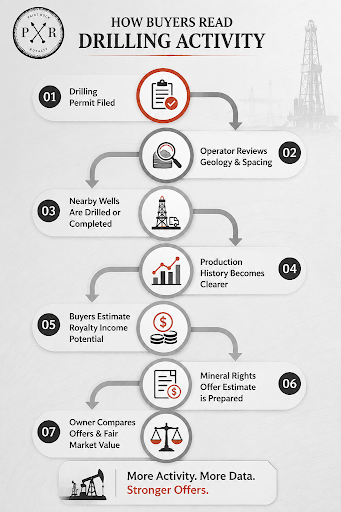
Drilling near your property may increase mineral rights value because it reduces uncertainty. Buyers prefer clearer information, and nearby development gives them more data. If operators are drilling successful wells nearby, buyers may believe your minerals have better future potential.
Additionally, oil and gas lease activity can create competition. When operators and buyers both show interest in an area, the mineral rights market value may rise. This is especially true when lease bonus offers improve, and production reports support strong results.
However, mineral owners should avoid assuming every nearby rig creates a premium. Some wells underperform. Some permits expire. Some development plans change. Therefore, accurate mineral acreage valuation should include both opportunity and risk.
How Oil and Gas Development Affects Property Mineral Value
Oil and gas development affects property mineral value by changing market expectations. Before drilling begins, buyers may rely heavily on geology, basin activity, and lease records. After drilling begins, they can review permits, completion reports, and production data.
As more information becomes available, the value picture becomes clearer. Strong nearby wells may increase confidence. Weak wells may reduce interest. Meanwhile, operators may shift capital to better zones if results disappoint.
For this reason, timing matters. Some owners choose to sell mineral rights for fair value when buyer demand is strong. Others hold their rights because they expect future royalty income. The better choice depends on personal goals, risk tolerance, and the quality of available offers.
Why Professional Mineral Rights Appraisal Matters
A mineral rights appraisal can help owners understand value before making a major decision. Without research, an owner may accept an offer that does not reflect current market conditions. On the other hand, an owner may overestimate value based only on nearby drilling.
A trusted mineral rights appraisal should consider drilling activity, mineral value, current production, future development, and comparable market activity. It should also account for legal ownership, acreage size, and lease status.
Owners in active states, including those seeking mineral rights valuation in Texas, should pay special attention to local basin trends. Texas has multiple producing regions, and value can change sharply by county, operator, formation, and well performance.
How To Compare Mineral Rights Offers
Mineral owners should compare mineral rights offers carefully before accepting one. The highest number may not always be the best option if the terms are unclear. A reliable buyer should explain how the offer was estimated and what property information was reviewed.
When reviewing offers, consider these questions.
- Did the buyer review nearby drilling activity?
• Did the buyer study active drilling permits?
• Did the buyer consider nearby well production?
• Did the buyer explain net mineral acreage valuation?
• Did the buyer provide clear terms and timing?
• Did the buyer account for oil and gas rights valuation risks?
A fair process should feel transparent. You should understand why an offer was made and how it relates to your minerals.
What Drilling Activity Means For Mineral Owners
Drilling activity can be a positive signal, but it should be interpreted carefully. It may suggest stronger development potential, better royalty income potential, and higher buyer interest. However, it does not automatically prove that your minerals are worth more.
The most reliable approach is to study the full picture. Review drilling permits near the property, operator activity nearby, production history nearby, and lease activity. Then compare your findings with professional insight.
If you are thinking about selling, leasing, or simply understanding your property’s mineral value, research matters. The right evaluation can help you avoid rushed decisions and negotiate from a stronger position.
Take the Next Step Toward Knowing Your Mineral Value
Your minerals may be worth more than you think, especially if drilling activity is increasing nearby. Take a few minutes to gather your county, legal description, lease details, and recent royalty statements. Then request a clear mineral rights offer estimate from a trusted buyer.
At Paint Rock Royalty, mineral owners can explore options for selling mineral rights, leasing oil and gas mineral rights, and understanding how the evaluation process works. Start by reviewing your ownership details, then ask for a fair market value review based on real activity near your acreage.
Ready to learn what your minerals could be worth?
Visit Paint Rock Royalty, request a mineral rights appraisal, and compare your options with confidence.
Frequently Asked Questions
How does nearby drilling activity affect mineral value?
Nearby drilling activity can increase mineral value when it shows stronger development potential. Buyers may pay more attention to acreage near active permits, producing wells, and reliable operators. Still, the exact value depends on ownership, lease terms, well results, and location.
Do active drilling permits always increase mineral rights value?
Active drilling permits can improve buyer interest, but they do not always increase value. Some permits may expire, change, or produce weak results. Buyers usually review permits along with nearby production, spacing plans, and operator history.
How do active wells impact mineral rights offers?
Active wells can support stronger offers when nearby production is consistent and profitable. Buyers study production history, decline rates, and distance from your acreage. If wells are close and successful, your mineral rights offer estimate may improve.
What factors matter most in mineral rights valuation?
Important mineral rights value factors include net mineral acres, location, production status, lease terms, royalty rate, nearby well production, active drilling permits, and future drilling probability. Buyer demand and oil and gas basin activity also influence value.
Should I sell mineral rights near active drilling?
Selling mineral rights near active drilling may make sense if buyer demand is strong and the offer reflects fair market value. However, holding may suit owners who want future royalty income. A professional appraisal can help you compare both options.
