

If you’ve ever watched your royalty income go quiet after a field becomes inactive, you know how unsettling it feels. One month, your oil and gas royalty check arrives like clockwork, and the next, it stops without warning.
You might wonder, what exactly happened? Did production stop? Is the operator holding your payments? Or worse, did your mineral rights lose value?
Let’s walk through what really happens when a field goes inactive, how it affects your royalty income, and what you can do to protect yourself.
Understanding What “Inactive” Really Means
When an oil or gas field goes inactive, production slows or halts altogether. That might happen for many reasons, declining reserves, mechanical problems, or changes in market prices.
During this downtime, no oil or gas is sold. That means no revenue is generated for the operator or the royalty owners. Without production, your royalty income from the inactive field also comes to a pause.
So if you suddenly stop receiving checks, it doesn’t always mean something’s wrong. It may simply mean nothing is being sold right now.
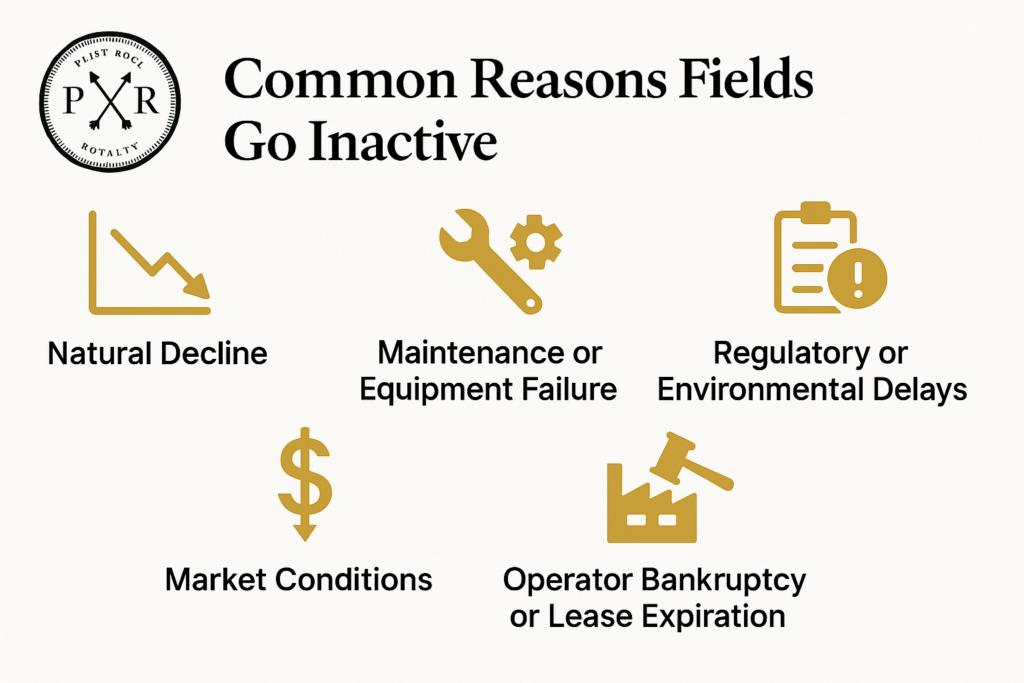
Common Reasons Fields Go Inactive
1. Natural Decline
Every oil and gas field has a natural life span. Over time, wells produce less and eventually stop yielding enough to cover operating costs.
2. Maintenance or Equipment Failure
Sometimes, the operator pauses production to repair pipelines, replace pumps, or upgrade infrastructure. These are temporary but can delay your royalty income for weeks or months.
3. Market Conditions
When oil or gas prices drop sharply, companies may choose to shut in wells to avoid selling at a loss. This is a business move, but it affects your oil and gas royalty payment suspension directly.
4. Regulatory or Environmental Delays
Inspections, permits, or environmental reviews can cause temporary production halts.
5. Operator Bankruptcy or Lease Expiration
If a company goes bankrupt or lets the lease expire, production may stop entirely until a new operator takes over.
What Happens to Your Royalty Income
When a field becomes inactive, your royalty income is suspended because royalties are tied directly to production.
The key point to remember: no production equals no royalties.
However, your ownership in the mineral rights remains intact. You still own the minerals underground; they just aren’t producing right now.
The Pause, Not the End
Think of this period as a pause, not an end. Once production resumes, your royalty checks will start flowing again.
In Texas, for example, if the lease remains valid and wells are restored to activity, you’ll begin receiving royalty income from the next production cycle.
Active vs Inactive Fields and Their Impact
Status | Production Level | Royalty Payments | Owner Action |
Active Field | Ongoing extraction and sales | Regular royalty checks | Monitor statements and production reports |
Temporarily Inactive | No production due to repairs, prices, or permits | Payments paused | Stay in contact with the operator, verify lease terms |
Permanently Inactive | Production ceased; the lease may end | Payments stop entirely | Check lease reversion clauses, explore sale options |
How to Handle a Royalty Payment Suspension
It’s stressful when checks stop showing up. But here’s what you can do.
1. Confirm Production Status
Start by confirming whether the field or well is inactive. You can contact the operator directly or check the Texas Railroad Commission (RRC) website for public production data.
2. Review Your Lease
Your lease should outline what happens when production stops. Some leases include clauses that allow operators to maintain the lease by paying a shut-in royalty, a small fee to keep the lease active even during downtime.
This is especially important for Texas mineral rights production halt scenarios, where leases can expire if no activity occurs for a set period.
3. Track Operator Communication
Operators are required to report production data and provide updates. Keep copies of any correspondence or statements you receive.
4. Manage Financial Expectations
When you depend on royalty income, an inactive field can create financial stress. It helps to plan for fluctuations and set aside funds during high-production months to offset leaner times.
Managing Royalty Income Fluctuations
Royalty income is never truly “steady.” Even active fields experience dips from pricing, production levels, or temporary shutdowns.
To handle managing royalty income fluctuations more confidently:
– Diversify your income. Don’t rely solely on royalty checks for long-term budgeting.
– Use royalty tracking tools. Services like EnergyLink or Texas RRC let you monitor production reports and payment data.
– Consult a mineral manager. They can help you understand the long-term potential of your minerals and navigate production halts.
These steps make it easier to respond quickly when your royalty income from an inactive field changes.
The Importance of Patience and Perspective
Oil and gas production is cyclical. Fields that are inactive today can return to life next year if prices rebound or technology improves.
For instance, new drilling techniques like re-fracking can revive wells previously considered uneconomical. That means your royalty income could return, sometimes even stronger than before.
At Paint Rock Royalty, we often see mineral owners panic when their royalty income stops. But after understanding the bigger picture, they realize their assets may still hold value for the future.
When to Consider Selling Your Royalty Interests
If your field has been inactive for years and the operator shows no sign of restarting production, you might explore selling your mineral rights.
This decision depends on several factors:
- Length of inactivity
- Market conditions
- Age of the well and lease terms
- Your financial goals
Selling can provide immediate cash instead of waiting for uncertain future income.
Paint Rock Royalty specializes in helping owners understand these choices clearly and transparently. You can learn more about how we evaluate mineral rights on our How It Works page.
What to Expect When Production Resumes
When production restarts, the operator will report new volumes to the state, and your royalty checks should resume within the next payment cycle.
Always verify the first check carefully. It should include back payments for all months of production since the restart.
If you notice missing payments or discrepancies, reach out to the operator or a mineral manager right away.
Key Takeaway
When a field goes inactive, your royalty income pauses, not disappears. Your minerals remain yours. And once production restarts, your payments will too.
By staying informed, reviewing your lease, and monitoring activity, you can manage the ups and downs of royalty income from an inactive field with confidence.
Turn Uncertainty into Confidence
Oil and gas production will always have ups and downs. But understanding what happens to your royalty income when a field goes inactive helps you stay calm, informed, and in control.
If you’re unsure about your next step, don’t wait in the dark. Connect with our team today and get clear, honest guidance tailored to your situation.
With the right insight, patience, and expert support, you can turn uncertainty into confidence nd ensure your royalty income keeps working for you for years to come.
Frequently Asked Questions
What happens to my royalty income when a field goes inactive?
Your payments pause because no production means no revenue. Once production restarts, payments resume automatically.
How long can a field stay inactive before my lease ends?
That depends on your lease terms. In Texas, some leases allow shut-in royalties to maintain validity during inactivity.
Can I still receive shut-in royalties from an inactive well?
Yes, if your lease includes a shut-in clause. It allows the operator to pay a small amount to keep the lease active
How do I manage royalty income fluctuations?
Diversify your income sources, track production data regularly, and plan for variability in your budget.
What should I do if my operator doesn’t respond?
Document all attempts to reach them, then contact your state’s oil and gas commission for public production updates.

